



This dental SEO case study shows how a systematic strategy can improve a clinic’s Google visibility, attract qualified organic traffic, and secure strong rankings for patient searches. Over 12 months, traffic to the Kichuk Dental Clinic website increased by 294%, from 3,581 to 14,097 sessions, while 134 queries reached position one through technical optimisation, expert-reviewed content, local SEO, and the development of dedicated service pages.
What does a real dental SEO case study show?
A useful SEO case study should do more than state how much traffic increased. It should explain the starting position, reporting period, data sources, and work completed. Without that context, a growth percentage is easy to misread. More website visits do not automatically mean the same percentage increase in appointments: pricing, reputation, site usability, staff response, and dentist availability also affect enquiries.
This article is based on a real dental clinic SEO case study in Odesa. The 12-month project was completed for Kichuk Dental Clinic. Results were recorded in Google Analytics, Google Search Console, and a keyword rank-tracking service, so metrics from different stages of the search funnel are kept separate.
- Organic traffic: growth from 3,581 to 14,097 sessions across comparable annual periods.
- Organic traffic growth: 294%.
- Google Search Console: 17.6K clicks and 2.07M impressions over 12 months.
- Rankings: 134 queries in TOP 1, 440 in TOP 3, and 723 in TOP 5.
- Content: 29 unique SEO texts prepared and reviewed by the clinic’s doctors.
What problem did the dental clinic need SEO to solve?
At the beginning, the website had low organic traffic and limited visibility for commercial and local searches. Some treatments were not represented by complete service pages, the keyword map did not cover the full patient journey, and technical and content issues made it harder for search engines to evaluate the site correctly. The goal was not to rank one phrase briefly, but to build a sustainable source of search traffic.
Search intent is particularly important in dentistry. Queries such as “dentist near me,” “dental implant cost,” “wisdom tooth removal,” and “children’s dentist” refer to different services and different stages of decision-making. Sending all of them to one generic page makes it harder for a visitor to find an answer and for Google to identify which need the page addresses.
What was included in the dental website SEO campaign?

Technical SEO audit and error correction
The campaign began with checks covering indexing, URL structure, duplicate pages, redirects, broken links, robots.txt, sitemap.xml, mobile usability, and loading speed. Corrections helped search crawlers find valuable pages instead of spending resources on technical clutter. After optimisation, the PageSpeed Insights performance score reached 90 out of 100 and the SEO score reached 92 out of 100.
Keyword research and service-page architecture
Queries were collected separately for implant dentistry, oral surgery, restorative treatment, orthodontics, paediatric dentistry, diagnostics, and other areas. They were then clustered by meaning and assigned to relevant pages. This reduces internal competition between pages and allows each treatment to be explained in the format expected by a prospective patient.
Expert-reviewed medical content
The project included 29 unique SEO texts and ongoing blog development. The content answered search questions and explained indications, treatment stages, limitations, prices, and alternatives. Every medical text was reviewed by the chief doctor or an appropriate specialist. In a healthcare topic, content must be more than search-optimised: it must also be accurate, understandable, and safe for readers.
Local SEO and patient trust
Pages were strengthened with local signals, including the city and district, a map, contact details, opening hours, doctor information, reviews, and clear booking options. Video introductions allowed prospective patients to meet clinicians before visiting. Local relevance is stronger when the clinic’s address, services, and business details are consistent across its website and Google Business Profile.
Internal links and conversion elements
Blog articles were linked to relevant service pages within useful contextual paragraphs. A visitor reading about a condition could move directly to a treatment, doctor, or booking option without searching the website again. FAQ sections, quick contact options, and Telegram lead notifications were also added so administrators could receive form submissions promptly.
What results did the dental clinic SEO campaign achieve?
Organic traffic increased from 3,581 to 14,097 sessions in one year. That equals 10,516 additional sessions and approximately 294% relative growth, according to Google Analytics. Over the latest 12-month period, Google Search Console recorded 17.6K clicks from search results and 2.07M impressions for the clinic’s pages.
| Metric | Result | Meaning |
|---|---|---|
| Organic sessions | 3,581 → 14,097 | Growth in visits from unpaid search |
| Traffic growth | +294% | Change compared with the starting annual period |
| Google clicks | 17.6K | User visits from Google search results |
| Google impressions | 2.07M | Appearances of website pages in search results |
| TOP 1 queries | 134 | Keywords for which the site held the first position |
| TOP 3 queries | 440 | Keywords within the first three organic results |
These figures represent different parts of the funnel. Impressions show visibility, clicks show visits from search results, sessions describe website visits, and rankings show where monitored queries appear. They should not be added together. A business-level assessment should also include calls, submitted forms, online bookings, and patients who actually attended appointments.
Why did traffic grow instead of rankings alone?
A high position for one broad keyword does not guarantee stable traffic. This campaign developed a wide search footprint that included commercial treatment queries, local phrases, and questions about symptoms, procedures, cost, and recovery. The website could therefore attract people at several decision stages, from initial research to readiness to book a consultation.
Growth was supported by a combination of technical foundations, service pages, blog content, expert review, and local optimisation. Removing one component can weaken the result: excellent copy cannot compensate for blocked indexing, while a fast website without useful information will not answer a patient’s questions.
How should dental SEO case studies be evaluated?
When choosing an SEO provider, ask for an explanation of every figure, not just an attractive chart. Confirm the comparison period, data source, starting traffic, region, completed work, and keyword set. Growth from a very small base can look dramatic as a percentage, which is why absolute values should always appear alongside relative growth.
- Are equivalent periods and the same traffic channel being compared?
- Are Google Analytics and Google Search Console figures available?
- Are absolute numbers shown with the growth percentage?
- Does the case describe the actual work, not only the final graph?
- Are traffic and rankings separated from leads and new patients?
- Can the website, its pages, and its search presence be checked?
Can another dental practice repeat these SEO results?
The strategic approach can be repeated, but the same percentage cannot be guaranteed. Results depend on the domain’s starting condition, local competition, service mix, budget, content approval speed, reputation, number of locations, and lead handling. Implant dentistry may be one clinic’s biggest opportunity, while paediatric dentistry, orthodontics, or neighbourhood searches may matter more for another.
For that reason, promotion should begin with an audit and an assessment of realistic growth opportunities. The findings are then turned into a website structure, content plan, and priorities for the coming months. The objective is to apply a proven method to the clinic’s real situation, not mechanically copy another project’s checklist.
How long does dental SEO take to show results?
Initial changes may appear after critical errors are fixed and pages are recrawled, but sustainable results are usually assessed over several months. The reporting period in this case was 12 months. A new website in a competitive city normally needs more time than an established domain with existing reviews, brand searches, and a history of useful content.
Reporting should show movement rather than only the final point: which pages entered the index, which queries improved, where clicks came from, and what users did next. This makes it possible to adjust priorities while the campaign is in progress.
How can SEO help a dental clinic appear in AI search?
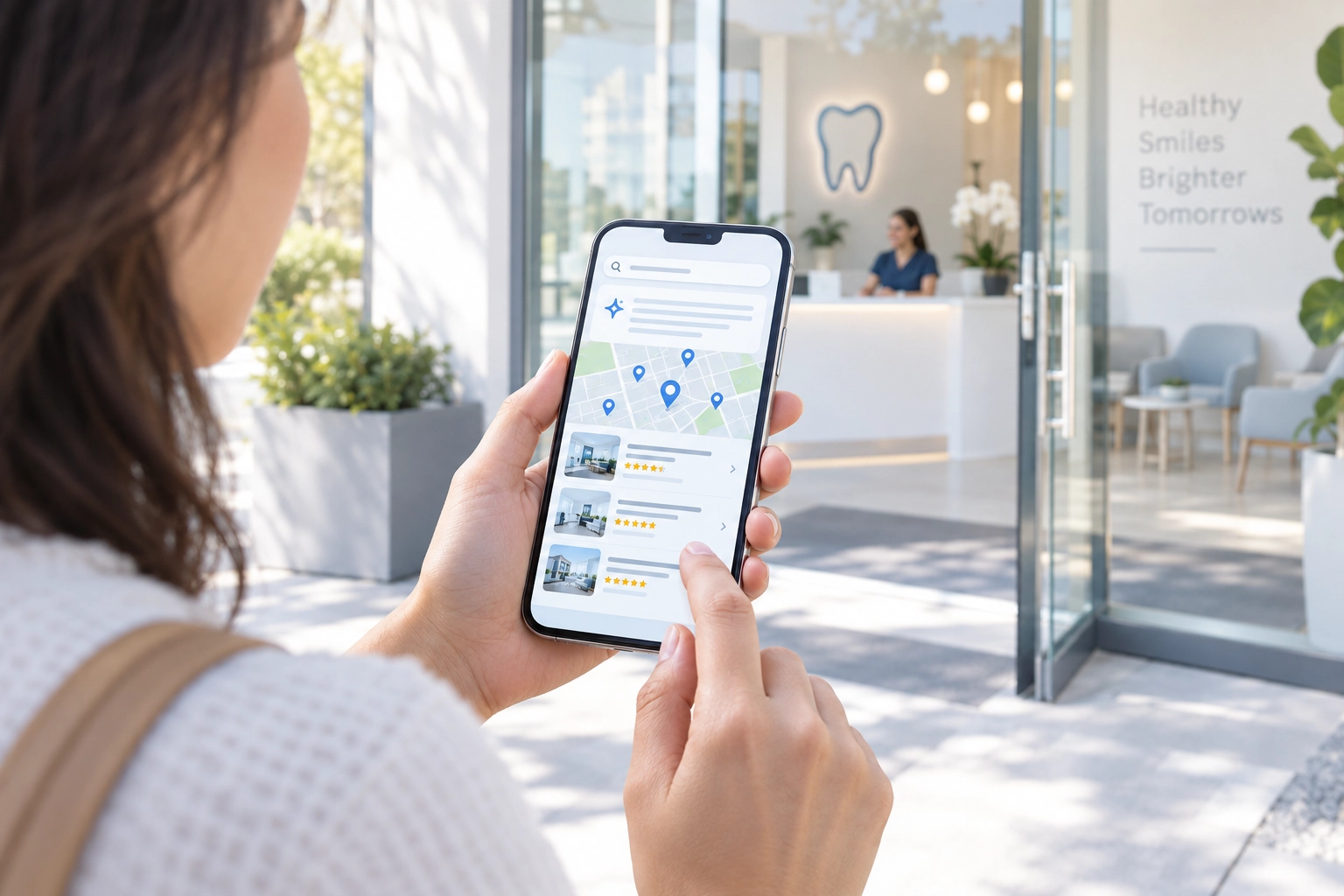
Patients increasingly use detailed prompts to compare treatments, understand costs, or find a suitable nearby clinic. Structured pages with clear answers, doctor profiles, treatment details, location information, and expert review are easier for both traditional search and AI-generated answer systems to interpret. There is no single switch that guarantees inclusion in AI answers: accessible pages, reliable information, and a verifiable reputation remain the foundation.
FAQ about dental SEO case studies
What should a dental SEO case study include?
It should show the starting situation, campaign period, completed work, data sources, and absolute results. Organic traffic, clicks, impressions, rankings, and conversions should be separated. A growth percentage without the starting value is not enough to evaluate performance objectively.
What results did the Kichuk Dental Clinic website achieve?
Organic traffic grew by 294% over 12 months, from 3,581 to 14,097 sessions. The website recorded 17.6K clicks and 2.07M Google Search Console impressions. Rank tracking showed 134 queries in TOP 1 and 440 in TOP 3.
What work increased the dental website’s traffic?
The result came from technical auditing, indexation fixes, keyword clustering, dedicated service pages, 29 expert-reviewed SEO texts, blog content, FAQs, internal links, local optimisation, and mobile improvements. It was a coordinated campaign rather than one universal tactic.
Does 294% traffic growth mean 294% more patients?
No. Traffic measures website visits, not patients. Calls, submitted forms, online bookings, and attended appointments must be tracked separately. Conversion is also affected by prices, reviews, dentist schedules, website usability, and how quickly clinic staff respond.
When can a dental clinic expect initial SEO results?
Initial movement may follow recrawling after important fixes, but sustainable growth is normally assessed over several months. Timing depends on domain age, competition, technical condition, service range, and publishing pace. The full result in this case was evaluated over 12 months.
Order dental SEO services based on a real case study
The Kichuk Dental Clinic case demonstrates how systematic work can expand search visibility: 294% organic traffic growth, 17.6K clicks, and hundreds of TOP 3 queries. Okeycompany analyses the website, competitors, treatments, and local demand before creating an individual SEO plan. Request a visibility audit to identify realistic growth opportunities without promises of instant first-place rankings.

