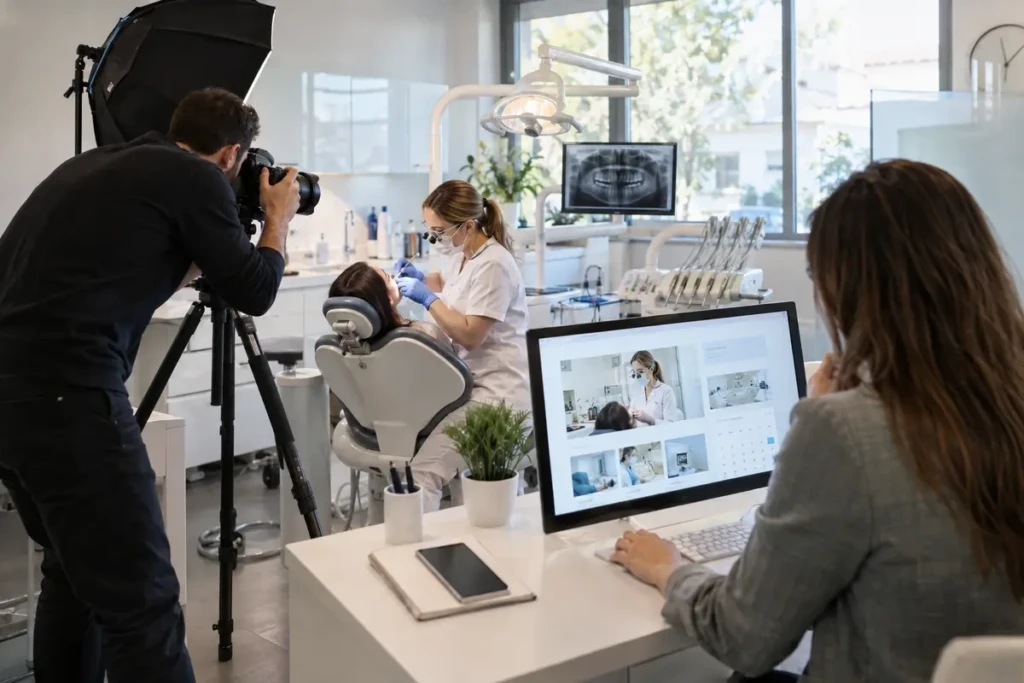
Dental clinic website promotion is the improvement of a site’s technical health, treatment pages, local visibility, dentist expertise, and booking experience. Its purpose is to show the clinic in Google for relevant patient searches, help people choose a suitable dentist, and turn visits into calls and enquiries. Sustainable results come from connected website architecture, useful content, Google Maps, reputation signals, analytics, and development rather than from a single SEO article.
Patients rarely decide after viewing one screen. They compare treatment methods, dentist qualifications, prices, clinic photographs, reviews, location, and appointment availability. A website must therefore do more than rank: it should answer concerns in a logical order. Comprehensive SEO website promotion connects search demand with a clear journey: query → relevant page → evidence of trust → appointment.
Why Does Dental Clinic Website Promotion Need a Dedicated Strategy?
Dentistry is a health-related subject in which inaccurate promises and anonymous content can be particularly harmful. A visitor wants to know who provides the treatment, what the stages involve, what affects the cost, and when an in-person examination is necessary. Search engines also need clear authorship, current information, and a strong match between each page and a genuine service provided by the clinic.
The second characteristic is local demand. People choose a practice in a convenient city or district, so the website competes in both ordinary search results and the local map pack. The third is the high value of a qualified enquiry: a visit from “dental implant cost” may matter more than dozens of general-information sessions. The strategy should therefore be measured through calls, forms, messenger clicks, and confirmed appointments as well as rankings and traffic.
Where Should Dental Website SEO Begin?
The work starts with an audit, not with publishing articles in bulk. The clinic needs to know which pages are indexed, which queries already generate impressions, where rankings are being lost, and where visitors abandon the path to booking. Our guide to dental clinic SEO explains the broader process. For an individual project, the initial review should cover four connected areas:
- Technical health: indexing, duplicate URLs, canonical tags, redirects, 404 errors, sitemap.xml, robots.txt, loading speed, mobile usability, and Core Web Vitals.
- Search demand: treatments, prices, symptoms, dentists, city, districts, branches, and patient questions.
- Content and trust: treatment-page depth, professional profiles, authors, review dates, patient feedback, licences, and authentic photographs.
- Conversion and analytics: visibility of telephone numbers, forms, online booking and messenger links, plus accurate attribution of enquiries.
Which Pages Does a Dental Clinic Website Need for SEO?

One general “Services” page cannot fully satisfy different search intentions. Dental implants, braces, root canal treatment, pediatric dentistry, hygiene, and wisdom tooth removal are distinct needs. Each priority treatment requires its own landing page. Otherwise, Google has difficulty identifying the most relevant result, while a potential patient has to search the website for essential information.
What Should a Dental Treatment Page Include?
The page should provide a direct answer near the beginning and then explain indications, stages, timing, limitations, preparation, and recovery. It should introduce the appropriate dentist, relevant equipment, genuine case examples, price guidance, and the factors that affect the final fee. A concise FAQ addresses common concerns, while a prominent contact option allows the visitor to book without returning to the homepage.
A commercial treatment page must not imitate a personal diagnosis or guarantee a clinical result. Its role is to explain the clinic’s approach and the appropriate next step. An educational article can answer a narrower question and lead naturally to the relevant treatment. This creates a topic cluster in which pages support one another instead of competing for the same queries.
How Should a Clinic Promote Its Dentists and Locations?
Every clinician needs a useful profile containing their speciality, education, experience, certificates, treatments, publications, authentic photographs, and a short introductory video where appropriate. Such a page can answer searches for the dentist’s name or speciality and helps a patient understand who will be responsible for treatment. When a group operates several practices, each genuine location needs a separate page with a unique address, telephone number, hours, map, team, photographs, and available services.
A clinic should not create dozens of nearly identical district pages for places where it has no real premises. Those pages provide little independent value and dilute the quality of the site. Geographic landing pages must reflect actual treatment locations and genuine local demand.
How Do Local SEO and Google Maps Attract Dental Patients?
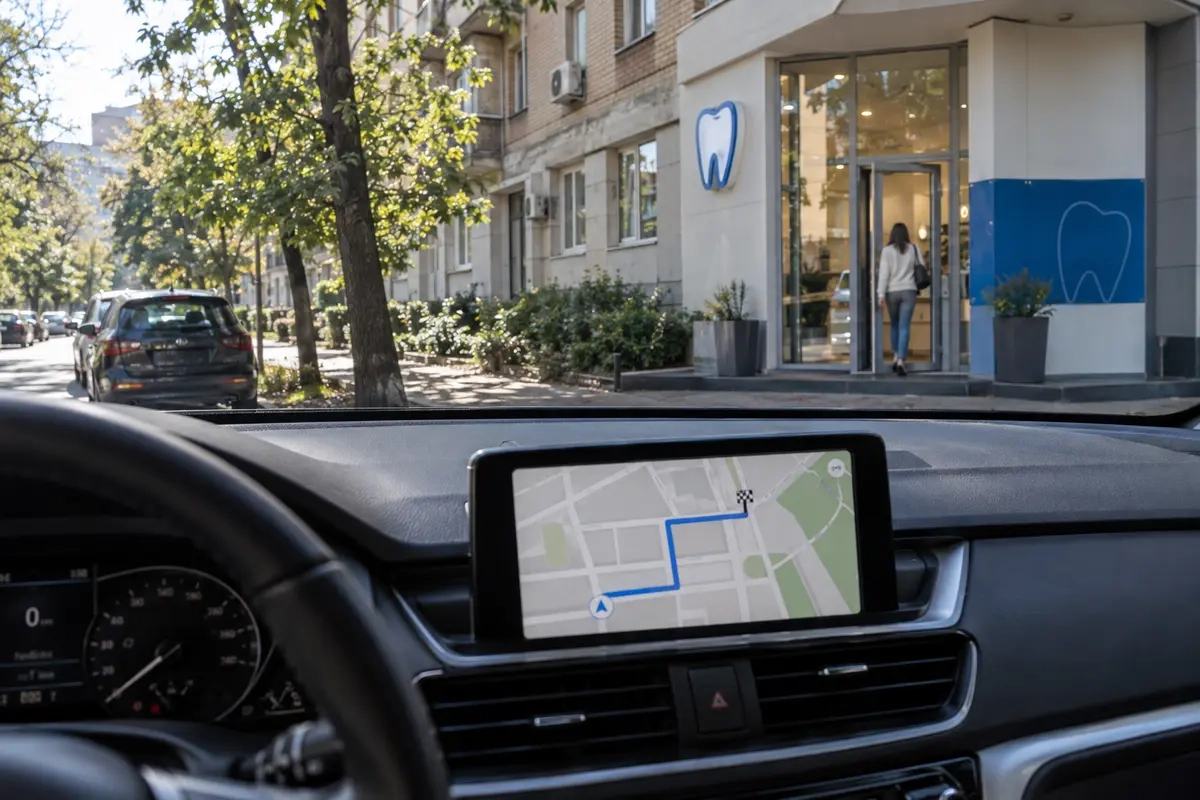
Searches such as “dentist near me,” “dentist in my area,” and treatment names combined with a city demonstrate a strong intention to book. Google explains that local results are mainly based on relevance, distance, and prominence. A complete Google Business Profile should therefore contain the exact practice name, appropriate categories, address, telephone number, hours, website link, treatments, and recent photographs. Our local SEO promotion guide explains how these signals work together.
Business details must be consistent across the website, map profile, and reputable directories. Clinics should request reviews after genuine visits and respond thoughtfully without disclosing a patient’s medical information. Buying reviews, adding keywords to the official business name, or creating addresses that do not exist can put the profile at risk and cannot replace quality work. Google describes its local ranking principles in its official Business Profile guidance.
How Does Content Demonstrate Dental Expertise and Support AI Search?
Articles should not be published simply to increase the post count. They need to answer genuine questions: how long implant treatment takes, when a dental CT scan is required, why a tooth may hurt after treatment, or how to care for braces. A useful page begins with a concise answer and continues with descriptive H2 and H3 headings, stages, limitations, an FAQ, and a contextual link to the relevant service.
An appropriate dentist should review medical material. The page should identify the author or reviewer, their speciality, and the date of the latest update. Clear language helps ordinary search, AI Overviews, and AI assistants interpret the information, but there is no separate magic technique for “neural search optimisation.” The foundation remains a crawlable website, original and useful content, demonstrable expertise, and unambiguous entities: the practice, dentists, services, and locations.
How Can Search Traffic Be Converted into Dental Appointments?
A high ranking has little value when the page loads slowly, price information is hidden, the telephone number is difficult to find, or the form requests too much data. On a mobile screen, visitors should quickly see the treatment, clinic or location, responsible dentist, price guidance, and a simple way to book. A clickable number, short form, messenger links, and online booking are useful when the practice genuinely monitors those channels.
SEO is stronger when it works within the wider patient acquisition system. Advertising can test demand quickly, social media introduces the dentists, reviews reduce uncertainty, and follow-up communication supports retention. Our guide to dental marketing explains how to coordinate these channels.
How Should Dental Website Promotion Be Measured?

Baseline values should be recorded before work begins, followed by changes at every stage of the funnel. Google Search Console provides queries, impressions, clicks, and positions; GA4 shows organic sessions and behaviour; call tracking and events record calls, forms, messenger actions, and bookings. The clinic should separately identify the pages and treatment categories that produce enquiries rather than visits alone.
- visibility across commercial, informational, and local query groups;
- the share of keywords in the top three and top ten, plus clicks and CTR for priority pages;
- Google Maps visibility and actions taken from the profile;
- calls, submitted forms, messenger clicks, and online appointments;
- conversion rate by landing page and the cost of each qualified enquiry;
- visibility in AI Overviews and AI assistant answers for relevant questions.
Our real dental SEO case study demonstrates the result of coordinated work. Organic traffic increased by 294% over 12 months, 134 queries reached Google’s top position, and 440 reached the top three. These figures cannot be promised automatically to every practice because starting conditions and competition differ, but the case demonstrates the relationship between technical optimisation, expert content, local visibility, and wider search reach.
How Long Does Dental Clinic Website Promotion Take?
Initial technical changes and improved indexing may become visible within several weeks. Movement for precise, lower-volume queries is often assessed after three to six months, while sustainable results for competitive treatments may require nine to twelve months or longer. The timeline depends on domain history, technical condition, the target city, competitors, treatment range, existing reputation, and the clinic’s speed in reviewing medical content.
SEO develops in stages. Technical obstacles are removed first; Google then reassesses the pages while content, behavioural, and off-page signals accumulate. A promise of a guaranteed number-one position within a few weeks, without an audit or competitor analysis, should therefore be treated with caution.
Which Mistakes Prevent a Dental Clinic Website from Ranking?
- promoting only the homepage without dedicated treatment pages;
- using the same text for different locations, districts, or procedures;
- publishing medical articles without clinical review, authorship, or an update date;
- showing inconsistent telephone numbers, addresses, or hours on the website and Google Maps;
- buying unrelated backlinks or fabricated reviews to create quick metrics;
- reporting traffic without calls, enquiries, and confirmed appointments;
- using an inconvenient mobile design, excessive form fields, or hidden contact information.
Correcting one isolated issue rarely transforms performance. Promotion becomes more predictable when technical foundations, website architecture, clinical expertise, local visibility, reputation, and analytics operate as one system.
FAQ About Dental Clinic Website Promotion
Can a New Dental Clinic Be Promoted in Google?
Yes. A new project first needs a sound technical foundation, a structure based on treatments, and genuine dentist and location pages. Google Business Profile and analytics should be configured in parallel. Initial rankings are usually easier to build around precise local and lower-volume queries before expanding coverage.
Should a Dental Website Display Treatment Prices?
It should show a fixed fee or a meaningful range where possible and explain what changes the final cost. This helps patients compare options and improves enquiry quality. When an exact price can only be established after diagnosis, the page should say so clearly instead of advertising a misleading minimum figure.
How Many Pages Does a Dental Clinic Website Need?
There is no universal number. Each distinct treatment, dentist, and genuine location needs a page when there is search demand and enough unique information to help the visitor. Architecture should reflect the clinic’s services and patient intentions, not an arbitrary target for the number of indexed URLs.
Can a Dental Blog Attract Patients?
Yes, when articles answer genuine questions, are reviewed by clinicians, and link naturally to relevant treatment pages. A blog reaches patients during research, explains care, and builds trust. Publishing without a strategy, clinical review, or useful internal linking produces much less value.
Which Is More Important for a Dental Practice: SEO or Google Ads?
The channels serve different purposes. Google Ads can capture demand quickly while the budget is active; SEO gradually builds durable visibility and organic demand. They are often most effective together: advertising tests queries and offers, while SEO improves the pages that reduce long-term dependence on paid clicks.
Request Dental Clinic Website Promotion
Would you like to know why your clinic website is not generating enough Google visits and appointments? Submit an enquiry and include the website address. We will review its technical condition, treatment architecture, local visibility, and patient drop-off points, then propose a clear SEO promotion plan.